
Project failure is one of the most expensive and persistent problems in modern business. Despite decades of progress in technology, tooling, and management frameworks, roughly 70% of projects still fail to meet their original objectives.
This article explores where the 70% failure rate comes from, what failure actually means in practice, the structural reasons projects fail, and why MVP-first approaches reduce risk.
Understanding Project Failure: What Counts as “Failing”?
A common misconception is that failure means cancellation. In reality, most failed projects are delivered, just unsuccessfully.
According to the Project Management Institute (PMI), a project is considered unsuccessful if it exceeds its approved budget, misses its deadline, delivers reduced scope, or fails to produce expected business value. That means failure is usually value failure, not delivery failure.
Where the “70% of Projects Fail” Statistic Comes From
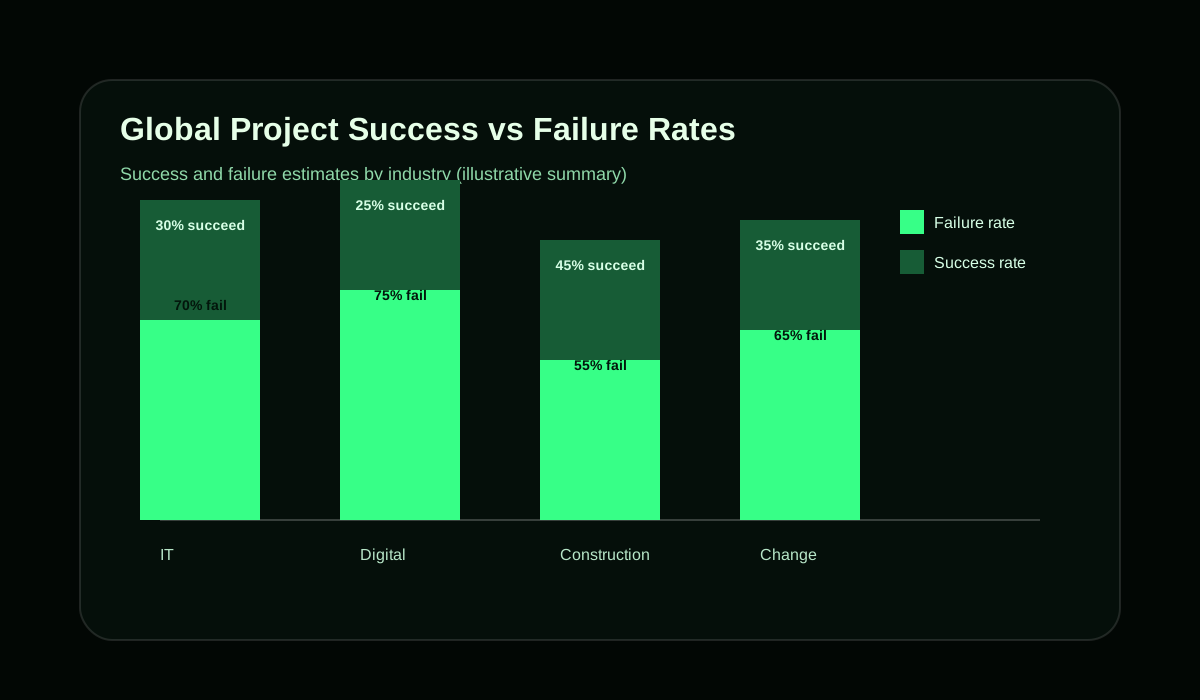
The 70% figure appears consistently across industries and reports. The data below is summarized from published industry research.
- PM360 Consulting reports that approximately 70% of projects fail to deliver what was originally promised, due to cost overruns, delays, or unmet requirements.
- PMI’s Pulse of the Profession reports that organizations waste over $1 trillion annually due to poor project performance.
- In IT and software development, failure or partial failure rates range from 65% to over 80%, depending on complexity and scale.
- Global surveys show that 70% of organizations experienced at least one failed project in the past year.
Why Projects Fail: The Real Root Causes
Project failure is rarely caused by a single mistake. It is the result of systemic issues that compound over time.
1. Unclear or Poorly Defined Objectives
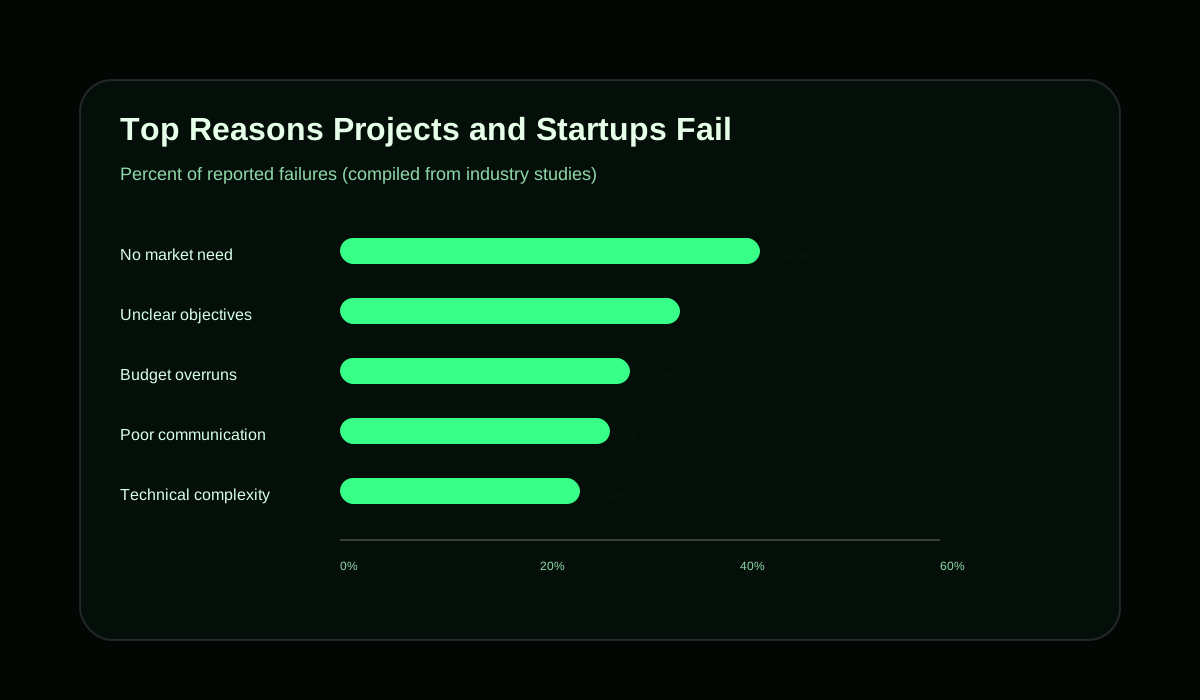
Projects fail early when success is not clearly defined. When goals are vague, teams interpret requirements differently, priorities shift mid-execution, and scope expands without control.
ProProfs reports that unclear objectives and poor requirements definition are among the top causes of project failure. PMI confirms that projects with clearly defined goals are nearly twice as likely to succeed.
2. Building Solutions Before Validating the Market
One of the most expensive mistakes teams make is building before validating demand. CB Insights found that 42% of startups failed because there was no market need. The same pattern applies to internal corporate projects.
3. Overengineering and Excessive Complexity
Complexity is one of the strongest predictors of failure, especially in software projects. IEEE Spectrum notes that large, complex systems have significantly higher failure rates and early architectural decisions often lock teams into fragile designs.
Overengineering early slows delivery, delays feedback, increases sunk costs, and reduces flexibility.
4. Poor Communication Between Stakeholders and Teams
Misalignment between decision-makers and execution teams is a major contributor to failure. PMI identifies ineffective communication as a primary cause of project failure, especially in cross-functional initiatives.
When communication breaks down, business goals are misunderstood, feedback arrives too late, and rework becomes expensive.
5. Unrealistic Timelines and Budget Expectations
Projects rarely fail because teams are slow. They fail because expectations were unrealistic from the start. PMI reports that more than 50% of projects exceed their original budgets, and timeline optimism is a consistent risk factor.
The Cost of Project Failure
Failure is not just a planning issue. It has real consequences: wasted financial investment, reduced morale, loss of trust, and delayed strategic progress. For startups, a single failed project can end the company entirely.
Why MVP-First Approaches Reduce Failure
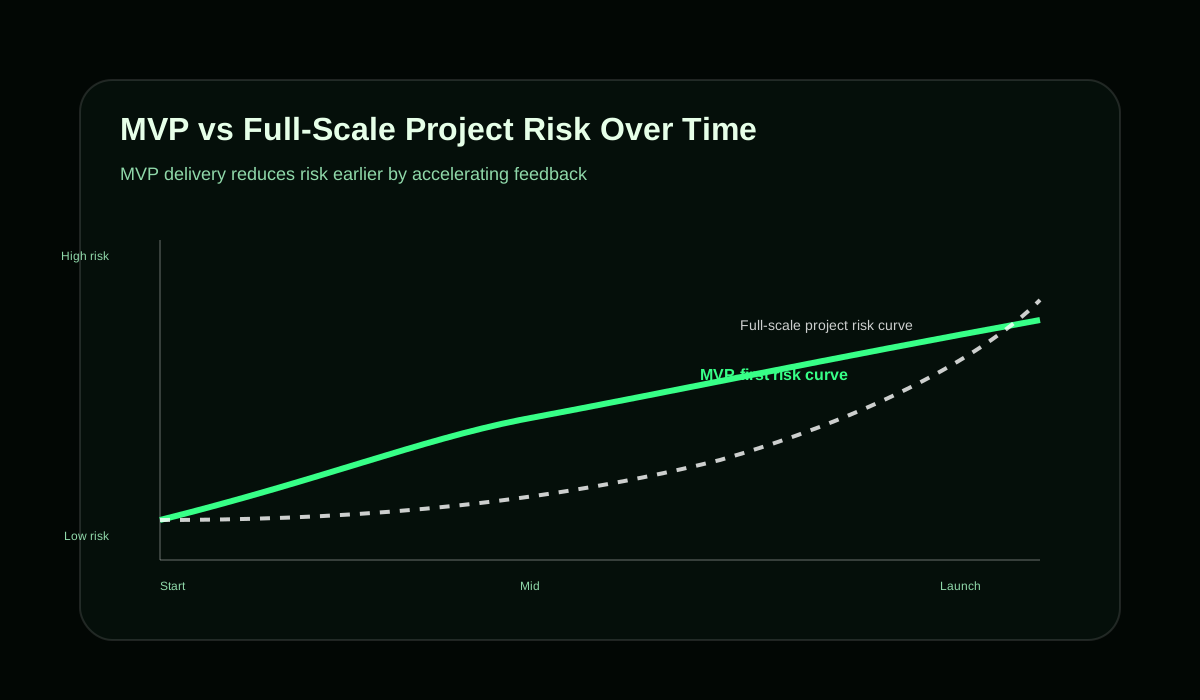
Teams that consistently succeed validate assumptions before scaling investment. An MVP (Minimum Viable Product) focuses on shipping the smallest useful solution, testing real user behavior, learning quickly, and avoiding unnecessary complexity.
Harvard Business Review explains that MVP-driven iteration reduces waste, accelerates learning, and improves decision-making.
How Successful Teams Structure Projects Differently
This is why many founders and product teams now prefer focused MVP development instead of long, high-risk project cycles.
If you are evaluating this approach, reach out at facile.codes/#contact to discuss scope, timing, and fit.
- Define success metrics before development.
- Keep decision-makers close to execution.
- Ship smaller increments faster.
- Validate continuously with real users.
- Delay complexity until it is justified.
Final Thoughts
The 70% project failure rate is not caused by lack of talent or tools. It is caused by unclear goals, premature complexity, slow feedback loops, misaligned execution, and unvalidated assumptions.
Successful teams do not eliminate risk, they reduce it early. The real question is not, “How do we build everything perfectly?” It is, “What is the smallest thing we can build to learn the most?”
References
All statistics referenced above come from the linked sources and published industry research.
- PM360 Consulting: https://pm360consulting.ie/project-failure-statistics-the-shocking-truth-2/
- PMI: https://www.pmi.org/learning/library/pulse-of-the-profession-2018-10718
- PMI: https://www.pmi.org/learning/library/high-cost-low-performance-organization-7831
- PMI: https://www.pmi.org/learning/library/poor-performance-costs-ruin-credibility-10658
- CB Insights: https://www.cbinsights.com/research/startup-failure-reasons-top/
- IEEE Spectrum: https://spectrum.ieee.org/why-software-projects-fail
- ProProfs Project: https://www.proprofsproject.com/blog/project-management-statistics/
- Harvard Business Review: https://hbr.org/2013/05/why-the-lean-start-up-changes-everything