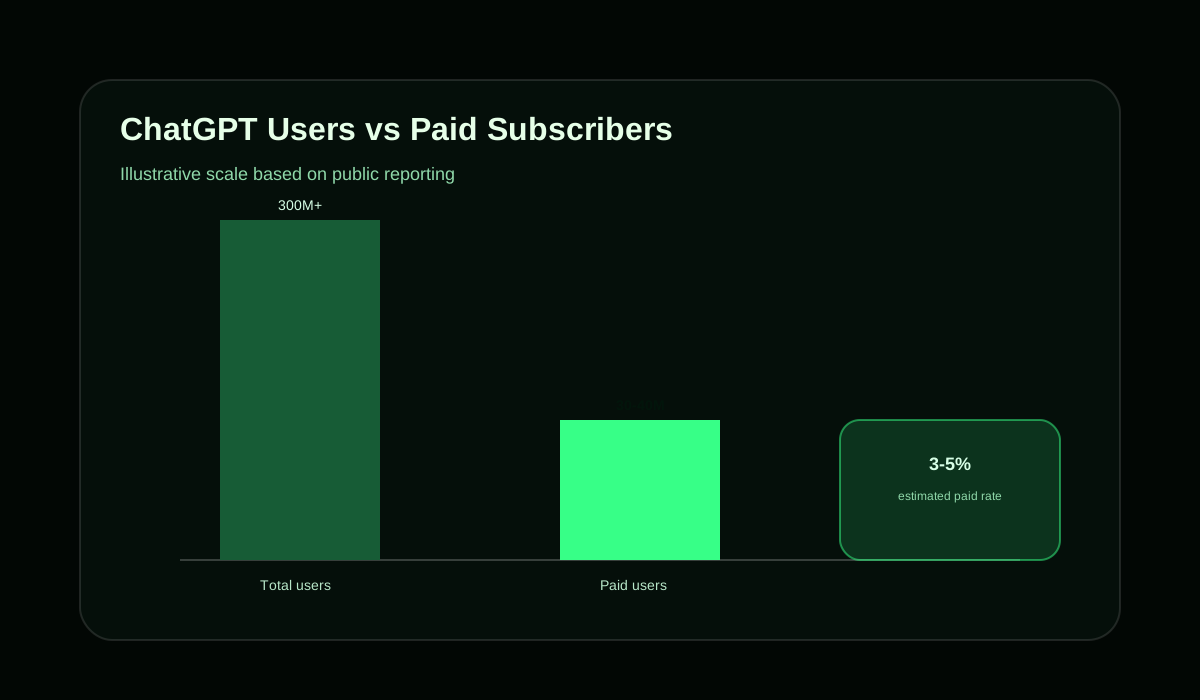
At first glance, OpenAI’s business model looks broken. ChatGPT is used by hundreds of millions of people worldwide, yet only a small fraction, roughly 3–5%, pay for a subscription.
For most products, that would be a red flag. For OpenAI, it is a deliberate strategy and a powerful lesson for startups building freemium, SaaS, or AI products.
How Many ChatGPT Users Actually Pay?
Public reporting does not give an exact conversion rate, but multiple reputable sources allow us to estimate it.
Taken together, these figures suggest a paid conversion rate of roughly 3–5%, depending on how active users are counted.
- Reuters reports that ChatGPT has hundreds of millions of active users globally, with tens of millions on paid plans.
- Futurism estimates that only a small single-digit percentage of ChatGPT users are paying customers.
- Business of Apps estimates ChatGPT has 30–40 million paid users out of a much larger active user base.
Why This Looks Like a Problem (But Isn’t)
Most SaaS founders aim for much higher conversion rates, often 10–20%. So why does OpenAI operate with such a low percentage?
Because freemium economics behave differently at massive scale. Spotify, Duolingo, and Dropbox all monetize single-digit percentages of users while remaining highly profitable.
Low conversion is not a weakness if user volume is enormous, value is concentrated, and monetization per paying user is high.
Value Is Unevenly Distributed
The majority of ChatGPT users experiment occasionally, ask casual questions, and do not depend on it for work.
A much smaller group uses ChatGPT daily, integrates it into workflows, saves significant time or money, and builds products or businesses with it.
Only this second group feels enough pain to pay. This pattern is consistent across freemium products.
OpenAI Monetizes More Than Just Subscriptions
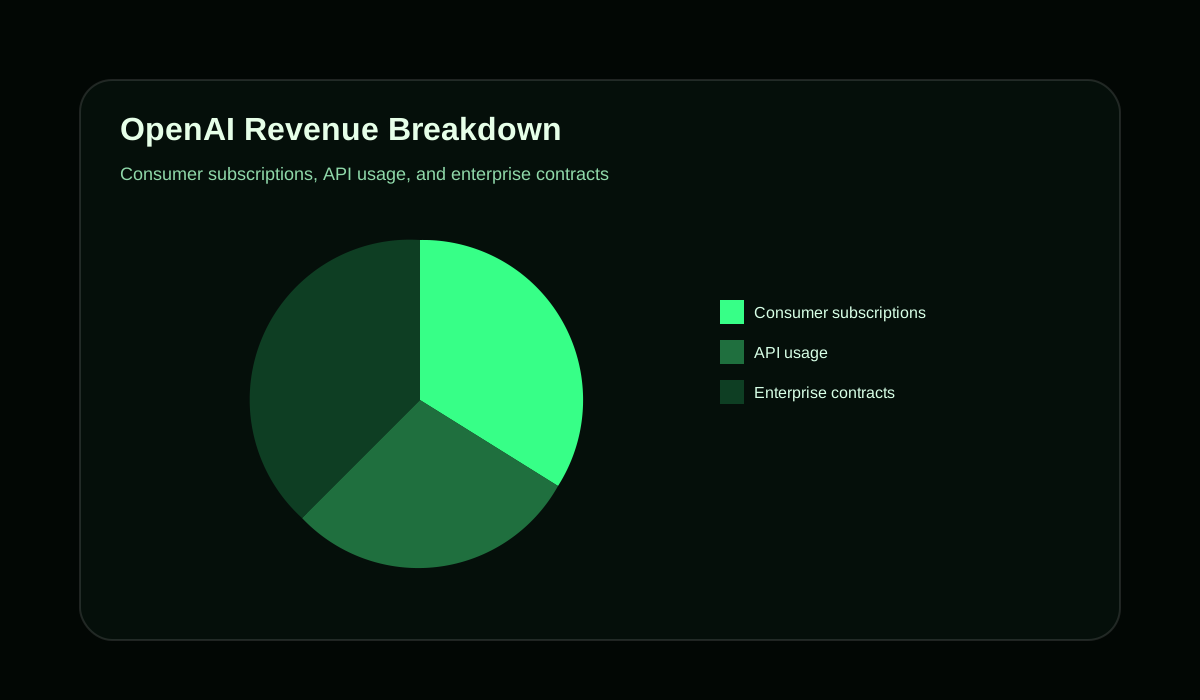
Paid consumer subscriptions are only one revenue stream. OpenAI also monetizes through API usage, enterprise and team plans, and large-scale business integrations.
Enterprise customers often generate orders of magnitude more revenue than individual users.
Why OpenAI Keeps the Free Tier So Generous
From the outside, it may seem counterintuitive to give away such a powerful product. In reality, the free tier drives massive distribution, builds habit and mindshare, trains users, and feeds the paid funnel.
Free users are strategic assets, not lost revenue. Free is not charity, it is leverage.
The Risk: Free Users Are Not Free
There is a downside. Free users still incur infrastructure costs, compute expenses, and support overhead.
OpenAI’s compute costs run into billions of dollars annually, making monetization efficiency critical.
Low conversion only works when paying users generate enough value and enterprise revenue subsidizes free usage.
What Founders Can Learn From OpenAI
- You do not need everyone to pay. You need a small group with a painful problem.
- Free users can be strategic. They drive growth, data, and brand dominance.
- Monetize depth, not breadth. Power users and businesses matter more than casual users.
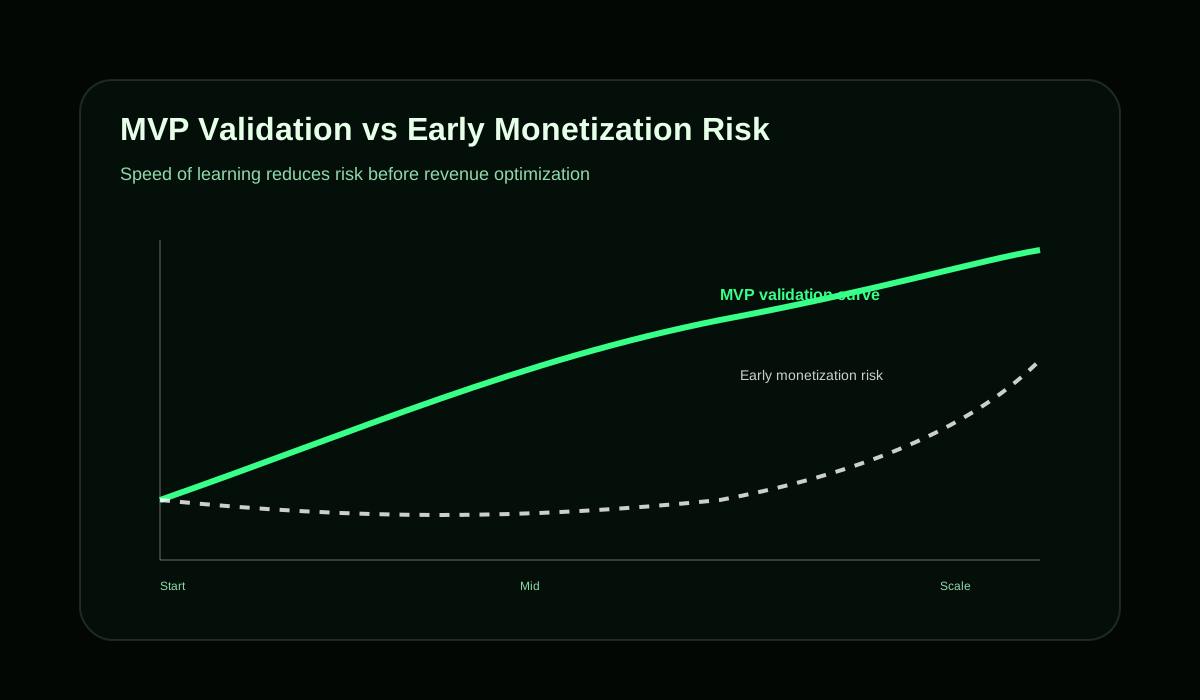
- Validate value before optimizing conversion. Conversion is meaningless without real value.
Why This Matters for MVPs and Early Products
Many early-stage products fail because they chase conversion too early, overbuild monetization, or misunderstand user pain.
OpenAI shows the opposite approach: maximize value first and let monetization follow naturally.
This is why modern teams increasingly start with focused MVPs, validating who gets real value before scaling features or pricing.
If you are exploring this approach, reach out at facile.codes/#contact to discuss scope, timing, and fit.
Final Thoughts
OpenAI’s 3–5% paid user rate is not a failure. It is evidence that value is uneven, attention is cheap, and pain is what people pay for.
The real question for founders is not, “Why do not more users pay?” It is, “Which users would be upset if this product disappeared tomorrow?”
Answer that, and monetization becomes obvious.
References
All statistics referenced above come from the linked sources and published reporting.
- Reuters: https://www.reuters.com/technology/openai-projected-least-220-million-people-will-pay-chatgpt-by-2030-information-2025-05-22/
- Reuters: https://www.reuters.com/technology/openai-says-it-has-more-than-1-million-business-users-2025-04-10/
- Futurism: https://futurism.com/the-byte/openai-chatgpt-users-pay
- Business of Apps: https://www.businessofapps.com/data/chatgpt-statistics/
- Harvard Business Review: https://hbr.org/2014/03/making-freemium-work
- Harvard Business Review: https://hbr.org/2015/06/what-freemium-means-for-your-business-model
- Business Insider: https://www.businessinsider.com/openai-chatgpt-ai-costs-billions-to-run-2025-1
- Andreessen Horowitz: https://a16z.com/2019/10/16/freemium-business-model/